
Over-Ear Headphones vs Earbuds: Which Fits Your Day?
By TezKhareed Team · Updated 14 September 2026
Both play music over Bluetooth and both take calls, so people assume the choice comes down to taste. It mostly comes down to two things instead: how long you wear them in one sitting, and whether you're moving while you do it.
The real difference
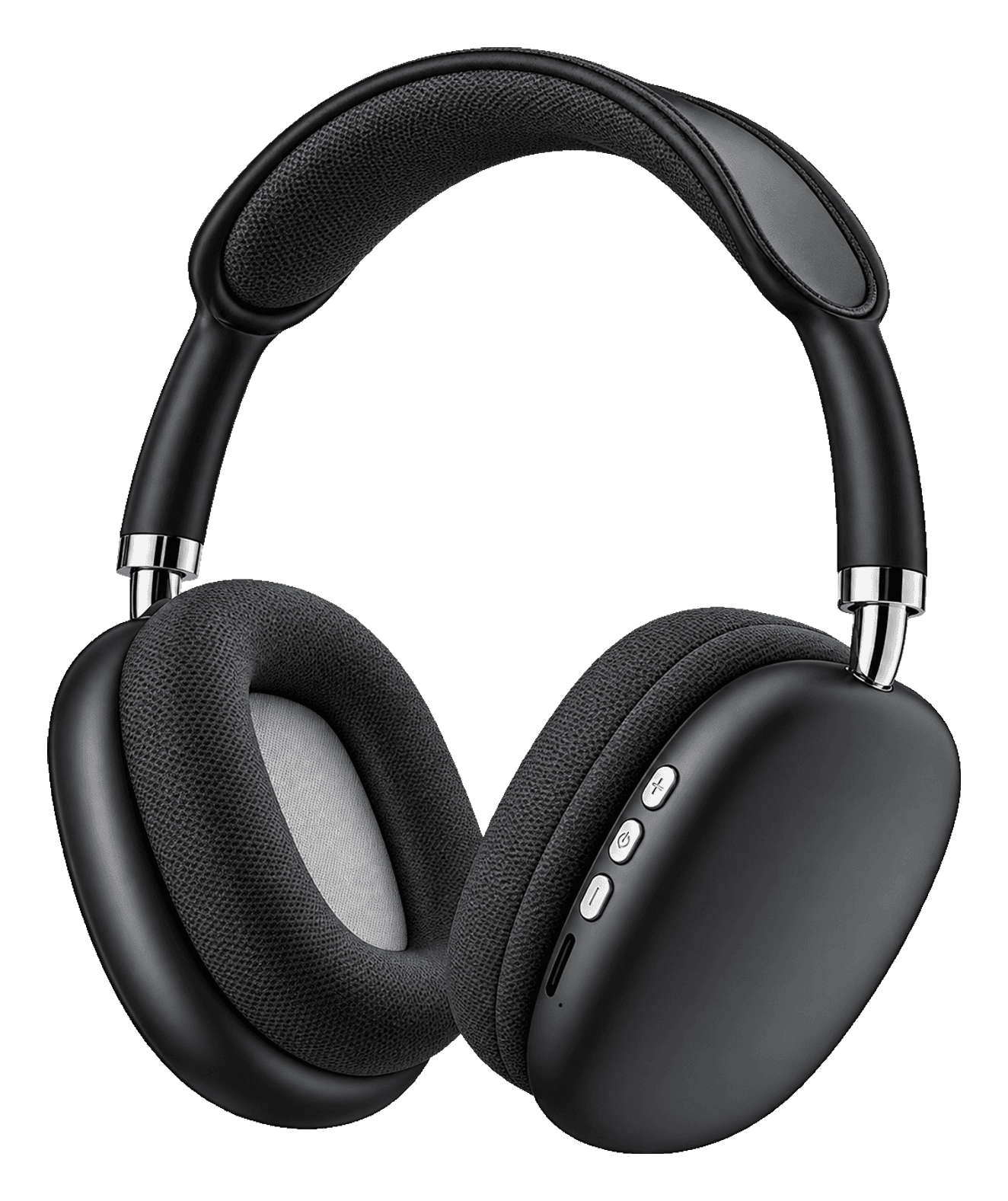
Over-ear headphones carry a bigger battery and a bigger driver in the earcup, because there's room for both. That's why a set like the P9 or the STN-28 can run longer between charges and hit a fuller bass than something the size of a fingertip. The trade-off is size and grip — a headband stays put on a couch or at a desk, but it's the wrong tool for a run.
Head to head
| Over-ear headphones | In-ear earbuds | |
|---|---|---|
| Typical battery (Bluetooth) | 6–8 hours | 3–6 hours |
| Bass and driver size | Bigger — 40mm+ drivers | Smaller drivers, tuned for fit |
| Works with glasses / earrings | Can pinch — check the clamp | No issue |
| Running or the gym | Bulky, headband shifts | Built for it |
| Losing a piece | Can't lose half a pair | Easy to lose one bud |
| Backup listening options | Often wired 3.5mm + microSD too | Bluetooth only |
| Price floor | Similar or lower | Similar or lower |
Where over-ear headphones actually win
Long single sessions where the battery matters more than the fit. Studying, gaming, working from a desk, a long flight — you're not moving much, so the extra size stops being a downside, and the longer runtime means you're not hunting for a charger mid-session.
When you want a fallback that doesn't depend on Bluetooth or battery at all. This is the part earbuds can't match, but check the product page first — not every over-ear set has it. The STN-28 takes a standard 3.5mm cable and reads MP3s straight off a microSD card with no phone involved, so a dead battery or a pairing issue doesn't end your listening. The P9, by contrast, is Bluetooth-only — a simpler set at a lower price, but plan around charging it if you want a backup option.
Kids and gifting. The STN-28's light-up RGB ears aren't just decoration — they make the headset genuinely identifiable as "mine" in a shared house, and the fold-flat headband adjusts down for a smaller head. An earbud is easy to lose in a school bag; a headphone with a light-up cat ear is not.
Where earbuds win
Anything active. Running, the gym, a commute where you're changing trains — a headband shifts and earcups get sweaty. Check our earbuds range if that's most of your listening.
Discretion. Earbuds don't announce themselves the way a headset with glowing ears does. If you want to take a call without it being obvious you're wearing headphones, earbuds are the better shape.
Pocketability. A charging case fits a pocket. A folded headband still needs a bag.
The honest recommendation
If more than half your listening happens in one place — a desk, a couch, a dorm room — buy over-ear. The battery life and the wired/microSD fallback pay off exactly there. If most of your listening happens while you're walking, training or commuting, the smaller earbud footprint wins even with the shorter battery, because you're topping it up in a case throughout the day anyway.
See the full headphones range or headphones in Pakistan — bank transfer, fast nationwide delivery, and stock updates on every product page.
Frequently asked questions
Do over-ear headphones sound better than earbuds?+
Bigger drivers generally mean fuller bass and a bigger soundstage, but tuning matters more than driver size alone — a well-tuned earbud can still beat a cheap headphone. Check the highlights on each product page rather than assuming size settles it.
Are over-ear headphones bad for the gym?+
For most people, yes — the headband shifts with movement and the earcups get sweaty. Earbuds are the better shape for a workout; save over-ear headphones for the desk, the couch or a study session.
Which is better for a kid?+
An over-ear set like the STN-28 — it is harder to lose than a pair of earbuds, the RGB ears make it easy to identify as theirs, and the microSD mode lets a child listen to loaded music with no phone or pairing step involved.
Part of our Headphones guides.