
Why Clear Phone Cases Turn Yellow (and How to Slow It Down)
By TezKhareed Team · Updated 14 September 2026
Every clear case yellows eventually — the question is how fast, and how much of that is on the case versus how you treat it. Two people can buy the same case and have completely different results a year later.
What's actually happening
Clear polycarbonate and TPU are both plastics, and plastics degrade under UV light — the same reaction that fades a car dashboard or a plastic garden chair, just slower on something in your pocket most of the day. UV exposure breaks down the polymer chains near the surface, and the yellow tint is a byproduct of that breakdown. Heat speeds the same reaction up, which is why a case left on a car dashboard or a phone that runs hot from gaming and charging at once tends to go first.
Skin oils and hand cream aren't just cosmetic residue either — some of what's in them reacts with the plastic surface over time, adding a second, slower source of discolouration on top of the UV effect. That's why the case often yellows more around the edges you grip than in the middle of the back panel.
Why some cases resist it and others don't
A case built with an anti-yellowing coating has a UV-resistant layer set into the polycarbonate itself, not just sprayed on top — a surface coating wears off with handling within weeks; one built into the material lasts far longer. This is the actual spec worth checking before you buy a clear case, not the brand name or the price point.
Cheaper clear cases often skip this entirely, using base-grade polycarbonate with no UV treatment. They'll typically show a visible tint within a few months of daily sun exposure — a bus commute with the phone in a bag pocket near a window is enough.
What actually slows it down
- Keep it out of direct sun when you can — on a dashboard, a windowsill, a beach towel. This is the single biggest factor, more than anything you do with cleaning.
- Wipe it down with a damp microfibre cloth every week or two. This clears skin oils before they've had long contact time, rather than letting them sit against the plastic for months.
- Avoid alcohol-based cleaners on a clear case specifically. They can strip a surface-applied anti-yellowing coating faster than normal wear would. Plain water or a mild soap solution is safer for clear plastics.
- Don't leave it charging wireless overnight against a hot power brick. Heat build-up against the back panel accelerates the same UV-style breakdown even without direct sunlight.
When yellowing means it's time to replace it
A faint tint after a year of daily use is normal wear, not a fault. A case that's gone visibly yellow within a couple of months, especially if you've kept it out of direct sun, points to a case built without any UV-resistant treatment in the material — worth factoring in next time, since price alone doesn't tell you which is which.
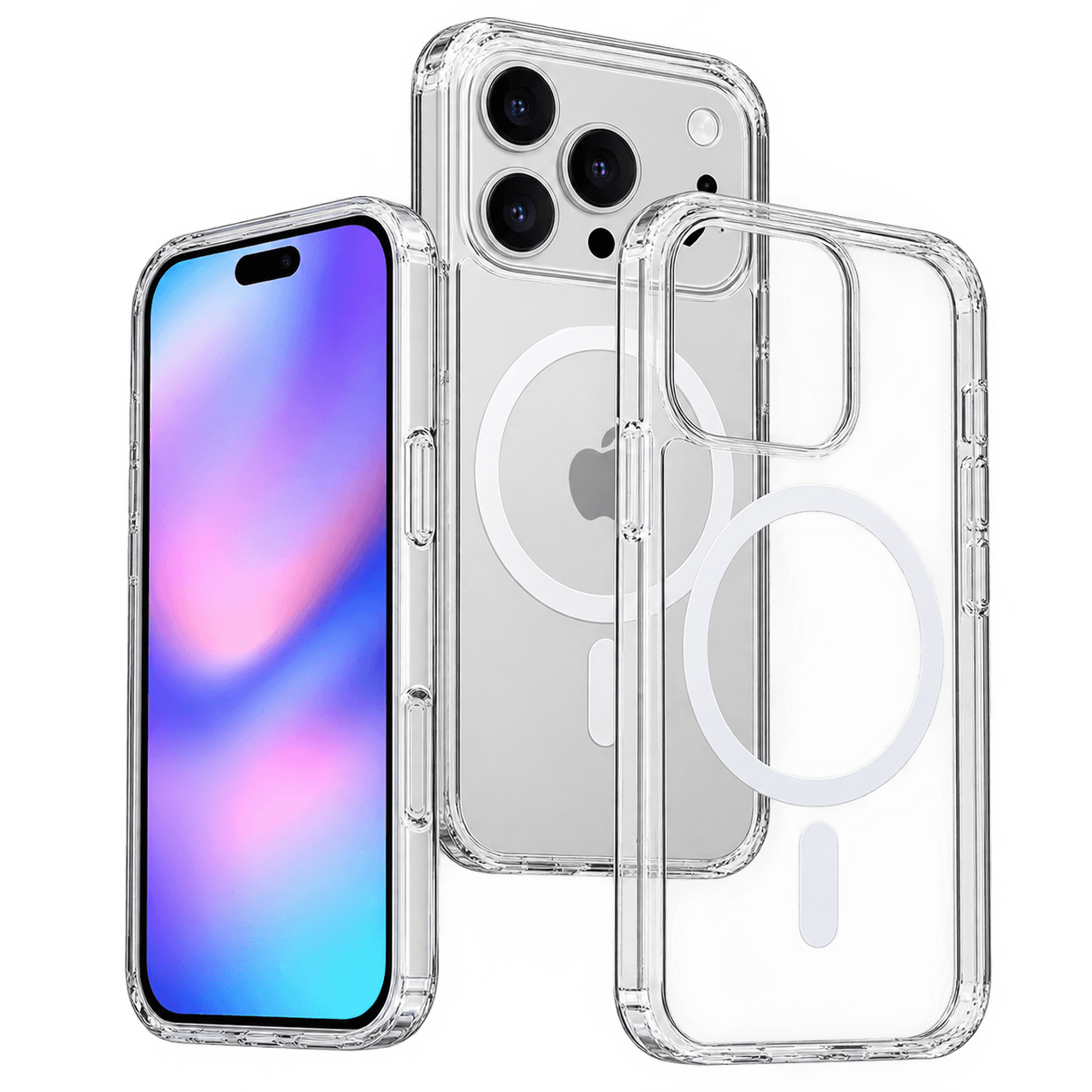
The Clear MagSafe Case we stock uses an anti-yellowing coat set into the polycarbonate itself rather than sprayed on the surface — it's listed in the product specs, not just the description. See the full phone cases range or phone cases in Pakistan for delivery details.
Frequently asked questions
Is yellowing covered under warranty?+
Gradual UV yellowing from normal use is expected wear on any clear case, not a defect — check the warranty terms on the specific product page for what is and is not covered.
Can a yellowed case be reversed or cleaned back to clear?+
Not reliably — the discolouration comes from the plastic itself breaking down, not surface dirt, so cleaning removes grime but will not restore the original clarity once the plastic has genuinely yellowed.
Do phone cases without an anti-yellowing coating cost less?+
Often yes, which is why it is worth checking the spec sheet specifically rather than assuming every clear case treats the plastic the same way.
Part of our Cases & Pouches guides.