
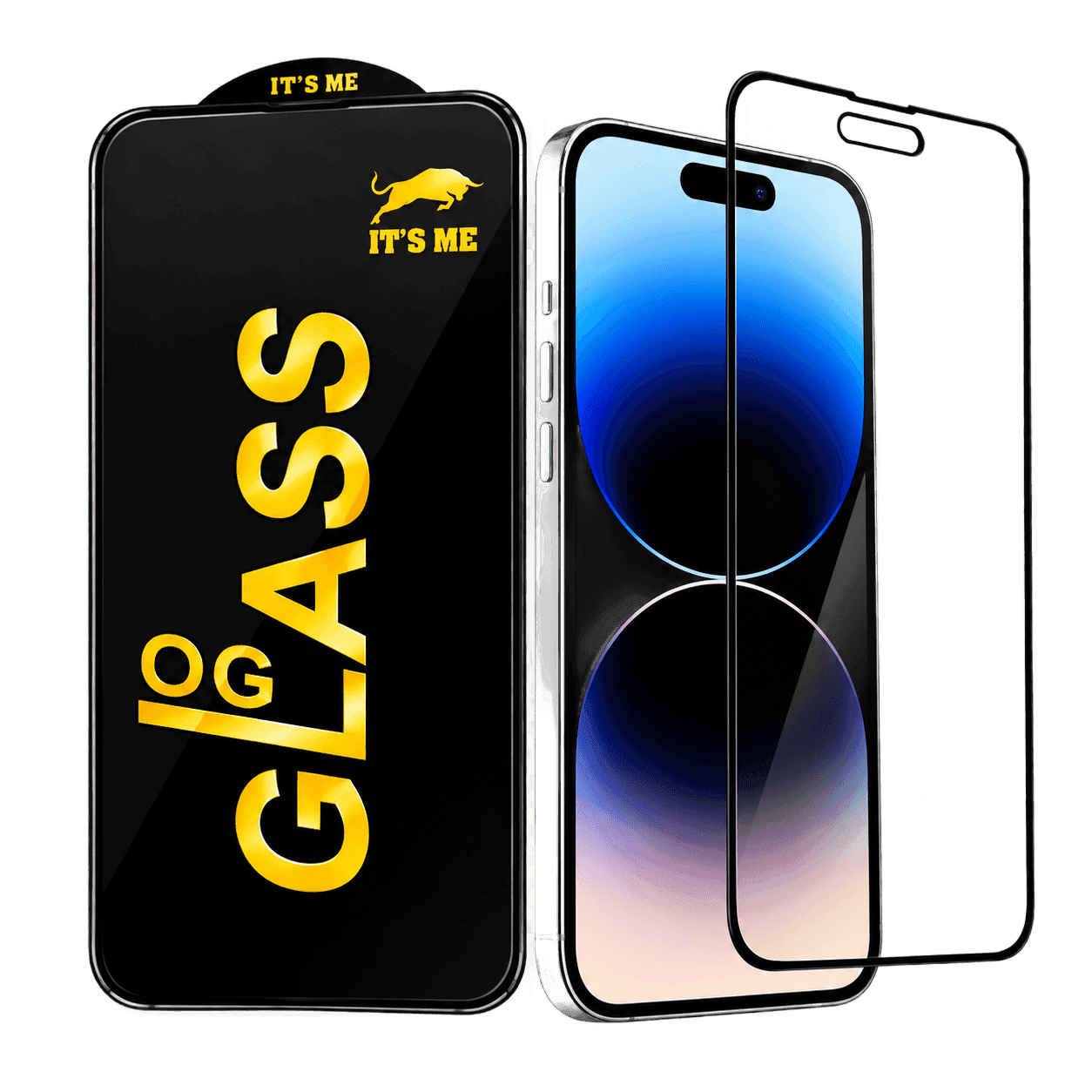
Privacy Glass Screen Protector: How It Works and Who Needs One
By TezKhareed Team · Updated 24 September 2026
Privacy glass is tempered glass with a filter built in that makes your screen look black to anyone beside you. Look straight at the phone and it reads normally; the person on the next seat sees a dark panel. It's a genuinely useful add-on for some people and an annoying downgrade for others — here's how to tell which you are.
How privacy glass works
A privacy filter is a layer of microscopic vertical louvres, a bit like tiny window blinds. Light leaving the screen straight toward you passes through. Light leaving at a wide angle hits the louvre walls and is blocked.
- The visible cone is usually somewhere around 30° either side of centre. The exact angle depends on the product, so check the listing.
- The glass on top is still ordinary 9H tempered glass — the filter is an extra layer, not a different kind of protection.
- It blocks the side-to-side view. That has consequences for how you hold the phone (see below).
What it costs you
Privacy glass isn't free. Before you buy, know the trade-offs:
- A dimmer screen. The filter absorbs light, so even straight on the display looks darker. You'll raise brightness to compensate, which costs some battery.
- Slightly muted colour and softer fine detail. Fine for messages and banking; noticeable if you edit photos or watch a lot of video.
- A narrower angle for you as well. Propping the phone on a desk and looking down at it, or watching a video with a friend beside you, both get worse.
- Sideways use flips the effect. The louvres turn with the phone. Rotate to landscape to watch a video and they now block the up-and-down view, so the person sitting next to you can see the screen while someone above or below can't.
- Sensors can be affected. A filter that isn't designed for your phone can interfere with Face ID, the front camera or the proximity sensor, and under-screen fingerprint readers are fussy about anything on top — see our guide to screen protectors and in-display fingerprint sensors.
- It usually costs more than a clear glass for the same model.
What privacy glass does not do
It only narrows the viewing angle. It does not:
- hide the screen from someone looking almost straight at it — say, across a table when you hold the phone toward them;
- stop screenshots, screen recording or a camera filming the screen head-on;
- replace a PIN, app lock or a careful habit of not opening sensitive apps in a crowd.
Think of it as a cheap shield against the casual glance, not a security product.
Who should buy it
| You… | Privacy glass? |
|---|---|
| Commute on buses, vans, the metro or rickshaws and open banking, JazzCash or Easypaisa apps | Yes |
| Handle customer data on the move — field sales, riders, insurance or bank staff | Yes |
| Read private messages in shared offices, classrooms or waiting rooms | Yes |
| Often show photos or videos to people beside you | No — use clear glass |
| Watch a lot of video, edit photos or game | Probably not — dimmer, narrower angle |
| Use your phone mostly at home, alone | Not needed |
How to check it's the real thing
Once it's on, hold the phone at arm's length and slowly tilt it (or move your head) to about 30–45° off centre. A real privacy filter fades the screen to black at that angle. If the display just looks dark from every angle, that's a tinted film passing itself off as privacy glass. Look for a demo photo or video of the side view before you buy.
Fit and application notes
- It's directional. The louvres only work one way up, so put it on the right way round — follow the top marking and the alignment frame.
- Model-specific. Pick your exact phone; curved-edge screens need glass made for the curve.
- Apply it like any tempered glass — dust-free, pressed from the centre out. Our bubble-free application guide covers it.
Not sure privacy glass is worth the trade-offs? Start with clear glass — see tempered glass vs privacy vs matte — and switch only if side glances are a real problem for you.
Browse screen protectors or screen protectors in Pakistan — pick your exact model, bank transfer with fast nationwide delivery.
Frequently asked questions
Does privacy glass work in landscape mode?+
Only partly. The filter blocks the side-to-side view when the phone is upright. Turn it sideways and it blocks the up-and-down view instead, so someone sitting next to you can see the screen.
Will privacy glass affect Face ID or the front camera?+
It can, if the filter was not designed for your model. Check the listing for your exact phone, and remember that under-screen fingerprint sensors are fussy about anything stuck on top of them.
How can I tell if privacy glass is real?+
Tilt the phone to about 30–45° off centre. A real filter fades the screen to black at that angle. If it looks dark from every angle, it is just a tinted film.
Does privacy glass protect better than normal tempered glass?+
Not by itself. Impact and scratch protection come from the tempered glass; the privacy layer only restricts the viewing angle.
Part of our Screen Protectors guides.